Determine your true thresholds.
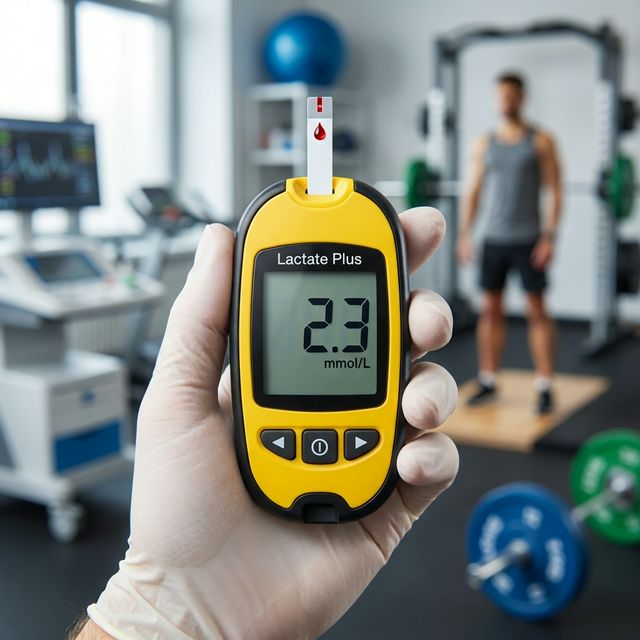
Lactate testing is the gold standard for determining your aerobic and anaerobic thresholds. Instead of guessing based on an FTP test, you get precise zones based on physiological measurements.
The physiology behind your zones
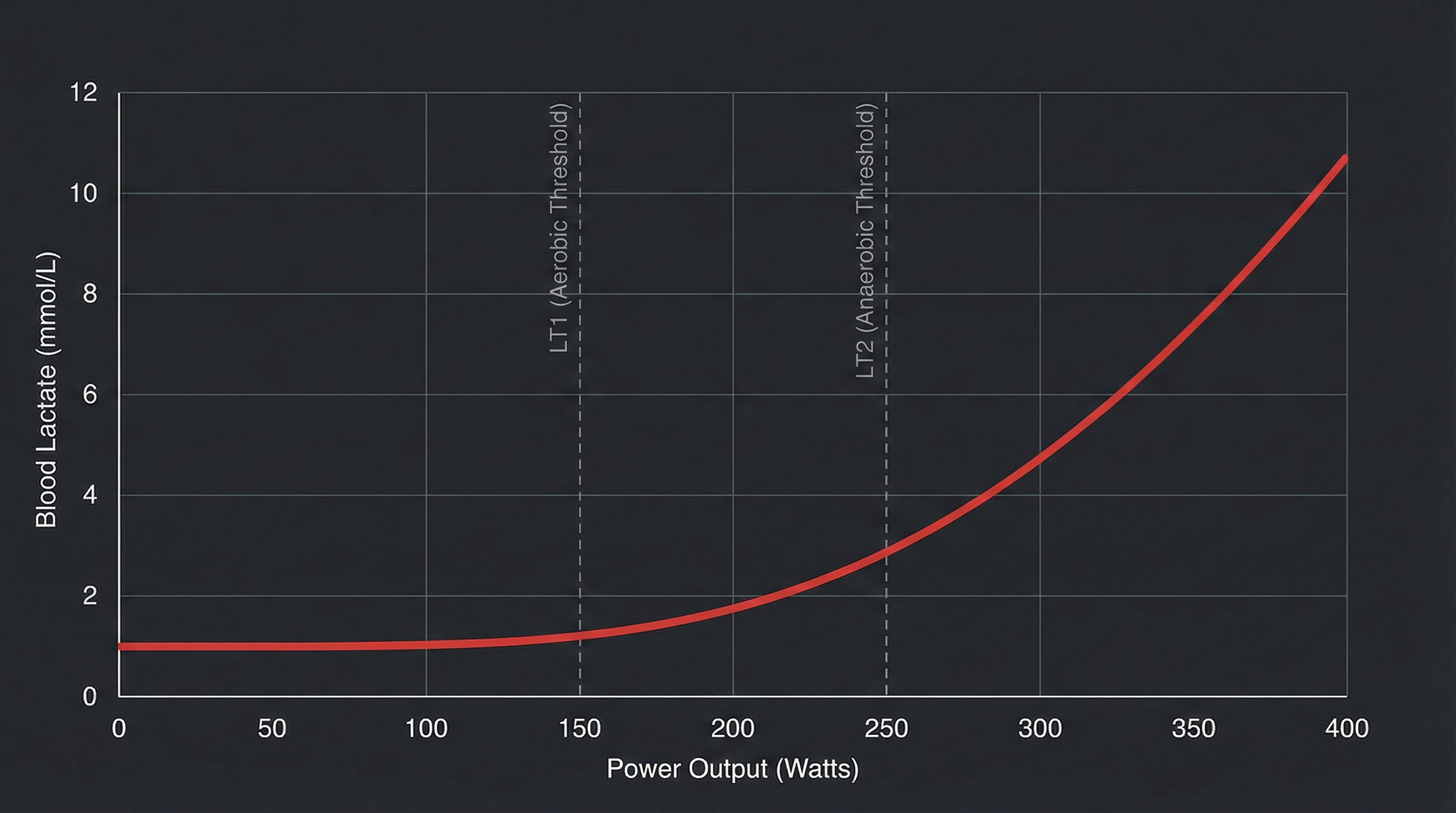
During exertion, your body produces lactate. The rate of lactate accumulation tells us where your physiological thresholds are — the points where your metabolism changes.
By measuring lactate at different intensities, we precisely determine:
- LT1 (aerobic threshold) — the intensity where lactate begins to slightly rise
- LT2 (anaerobic threshold) — the intensity where lactate rises exponentially
- Individual training zones — based on your physiology, not formulas
How the test works
Step test with lactate measurements at each step.
Preparation
Short interview, body composition measurement.
Warm-up
10 min easy warm-up to prepare the body.
Step test
4-6 min steps with increasing intensity.
Measurement
Lactate value measurement at the end of each step.
Analysis
Data processing and threshold determination.
Lactate test pricing
Lactate testing
- Step lactate test
- LT1 and LT2 determination
- Individual training zones
- PDF report
- 30-min consultation
Combination with INSCYD
Lactate testing is part of the INSCYD test, which provides a complete picture of your physiology. I recommend the INSCYD La test.
View INSCYD packagesFrequently asked questions
The draw is minimally invasive. We use a lancet on the earlobe, similar to blood sugar testing. Most people barely notice it.
Come rested (no intense training 48h before), light meal 2-3h before, and well hydrated. Bring your bike and clothing.
A lactate test determines LT1 and LT2 thresholds. The INSCYD test goes a step further. In addition to thresholds, it also determines VLamax, VO2max, FatMax, and tells you what limits your performance.
I recommend testing every 8-12 weeks depending on the training period.
Discover your thresholds
Book a lactate test and stop guessing where your zones are.